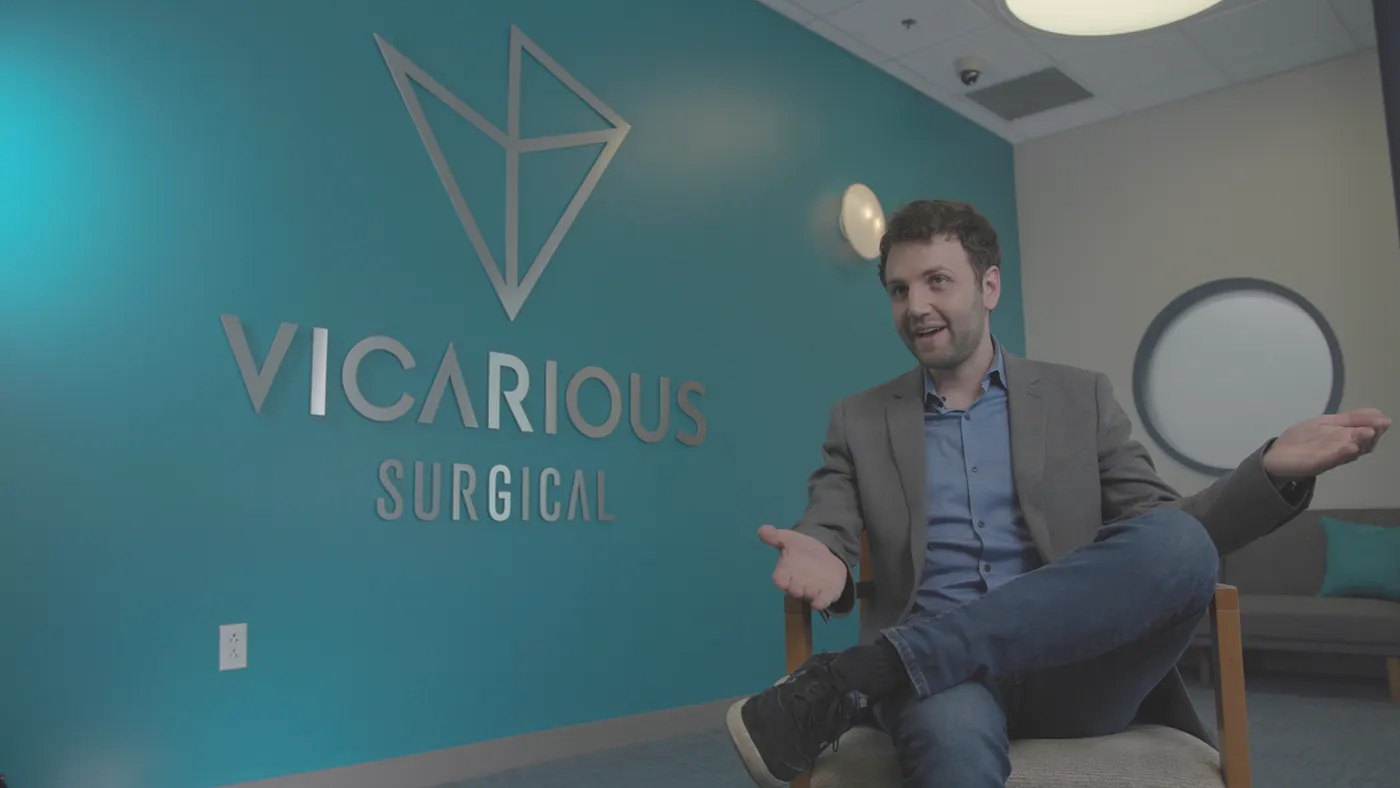
The movie The Fantastic Voyage really resonated with me and was one of the inspirations for starting Vicarious Surgical. For those who haven’t seen it, a scientist discovers how to shrink humans and objects down to microscopic size.
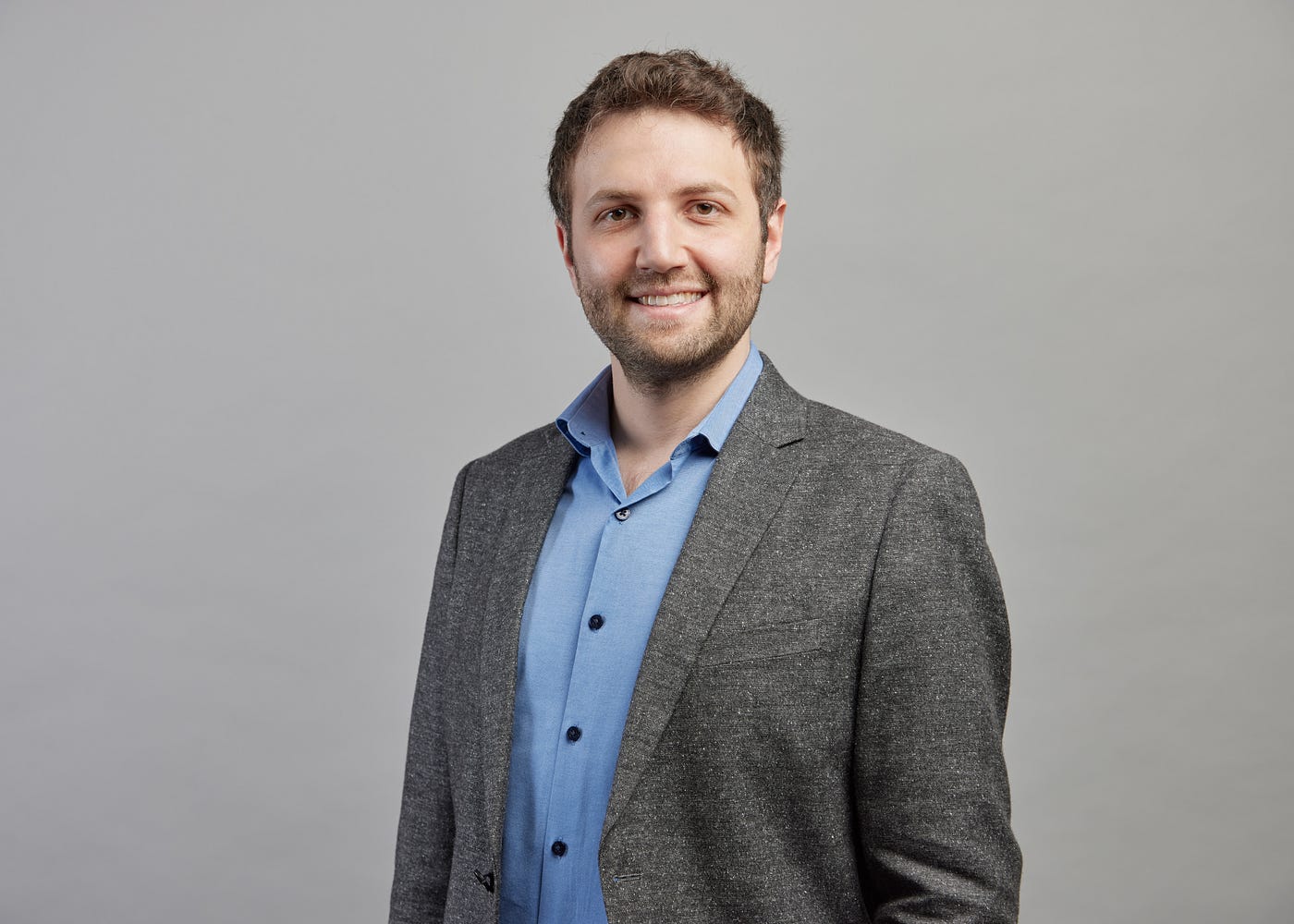
The CEO and co-founder of Vicarious Surgical shares how childhood immersion in design and engineering led to pioneering breakthrough medical robotics.
The movie The Fantastic Voyage really resonated with me and was one of the inspirations for starting Vicarious Surgical. For those who haven’t seen it, a scientist discovers how to shrink humans and objects down to microscopic size.
As a part of our series called “Meet The Inventors”, I had the pleasure of interviewing Adam Sachs.
Adam Sachs is CEO of Vicarious Surgical, a surgical robotics company he co-founded in 2014. Sachs leads the development and commercialization of the company’s surgical robots to increase the efficiency of procedures and improve patient outcomes. Prior to founding Vicarious Surgical, Sachs worked at Apple in manufacturing. He holds a Bachelor of Science in mechanical engineering from MIT and has worked for more than 11 years as a volunteer emergency medical technician for MIT EMS, an ambulance serving the MIT community.
Thank you so much for doing this with us! Before we dive in, our readers would love to learn a bit more about you. Can you tell us a bit about your “childhood backstory”?
I grew up right outside of Boston, Mass. My father is a professor at MIT and my mother is an architect, so from a very early age I was immersed in an environment that was a combination of both design and engineering. From there, I went on to study robotics and biomedical engineering at MIT, and had a brief stint at Apple in manufacturing.
Can you please give us your favorite “Life Lesson Quote”? Can you share how that was relevant to you in your life?
I actually don’t have a specific life lesson quote that I live by. Life is complex and ever-changing and can’t be captured in just a single phrase; I pull inspiration and guidance from a variety of different areas.
Is there a particular book, podcast, or film that made a significant impact on you? Can you share a story or explain why it resonated with you so much?
The movie The Fantastic Voyage really resonated with me and was one of the inspirations for starting Vicarious Surgical. For those who haven’t seen it, a scientist discovers how to shrink humans and objects down to microscopic size. When the scientist ends up with a brain clot, a submarine and a team of people are shrunk and go into his body to fix the clot and save his life.
Of course, shrinking people is the work of a science fiction movie, however, it did get me thinking about the benefits of a human being “transplanted” and seeing inside a patient’s body as much as possible. From an engineering standpoint I began to think — what if we had a surgical arm with nine degrees of freedom so it replicated a surgeon’s real body instead of a bunch of sticks with wrists? What if we created a camera that could see anywhere and then coupled it with virtual reality, so a surgeon had visibility into the abdomen while operating? That is the path of thinking this film sent me down, and it would eventually result in me working to make this concept and technology a reality.
What was the catalyst that inspired you to invent your product? Can you share the story of your “ah ha” moment with us?
In this case there wasn’t just one “ah ha” moment but a series of them. The catalyst was discovering the enormity of what surgeons must do as part of their day to day, including both physically and mentally draining tasks to provide care for patients.
I can give you an example. I’ve seen a surgeon lift weights to strengthen the muscles on the tops of his arms so he would be strong enough to hold them above a patient for an hours-long procedure. In a sense, this commitment is wonderful and a testament to surgeons’ dedication to their patients and their willingness to go to extreme lengths to ensure positive outcomes. Yet ideally, surgeons shouldn’t be burdened with these kinds of physician obstacles — their time and energy should be focused solely on caring for patients.
At the same time, probably within the same month, I was seeing some of the original videos for virtual reality and realizing the potential it could unlock. I was also working with robotics and thought back to The Fantastic Voyage. All of these “ah ha” moments aligned and evolved into what would later become Vicarious Surgical.
There is no shortage of good ideas out there. Many people have good ideas all the time. But people seem to struggle in taking a good idea and translating it into an actual business. How did you overcome this challenge?
I agree that there are a ton of good ideas out there, but there are fewer that are:
When you take these factors into consideration, a lot of ideas are out of the running. The first step for me when starting Vicarious Surgical was considering these factors and making sure that we checked off every one of them. For example, being confident the virtual reality, camera technology, and robotics would be advanced enough to achieve our vision in the timeframe when we wanted to launch and not 20 years down the road.
Additionally, you need to be relentless and have the drive to keep going. When I first had the idea for the company, I started cold calling surgeons to initiate conversations and figure out what their pain points were and how we could best address them. There are going to be a ton of things that don’t work, and you need to know what just needs more trying, and when you need to pivot. At the end of the day, that’s still my primary job as co-founder and what I will continue to do moving forward.
Often when people think of a new idea, they dismiss it saying someone else must have thought of it before. How would you recommend that someone go about researching whether or not their idea has already been created?
Doing your due diligence at the beginning of a new business idea is a good place to start. This includes conducting research, looking up patents, and maybe most importantly, talking to people in the industry. In addition to cold outreach, I reached out to people in my network to talk about my vision and bounce ideas around to ensure the idea was truly novel. Moving forward with executing a vision for a company is the hardest part, so don’t be afraid to talk to people about your ideas before you get started.
Did you have a role model or a person who inspired you to persevere despite the hardships involved in taking the risk of selling a new product?
I don’t have a singular role model, but I do find inspiration in specific traits from a handful of different business leaders. For example, I admire Steve Jobs’ creativity in Apple, Elon Musk’s ability to generate enthusiasm about Tesla, and Bill Gate’s business objectives and the way he was able to grow Microsoft into the success it is today. If you could combine all these traits into one individual, then you would have my ideal role model.
For the benefit of our readers, can you share the story, and outline the steps that you went through, from when you thought of the idea, until it finally landed on the store shelves (or received FDA breakthrough designation)? In particular we’d love to hear about how to file a patent, how to source a good manufacturer, and how to find a retailer to distribute it. (This can be adjusted to be more FDA oriented)
After coming up with the idea of Vicarious Surgical and making sure it had legs, we worked to bootstrap the company and after a lot of hard work, our technology received Breakthrough Device Designation by the FDA in late 2019 — the first and only surgical robot to receive this designation from the FDA to the best of our knowledge.
As far filing a patent goes, if you are at the very beginning stages and filing it yourself, my advice would be to read up on all the materials you can find on how to write a patent — books, articles, how to guides, etc. If you do the necessary research beforehand, you’ll be able to write and file your patent yourself without needing to hire a patent attorney. The claims in the patent are always the tricky part that benefits from experienced counsel, but fortunately these can be revised later as long as you do a great job of describing the invention.
Can you share a story about the funniest mistake you made when you were first starting? Can you tell us what lesson you learned from that?
One of our investors had invited us to a holiday party via email, which outlined all the details for the party. Little did I know, there was an attachment that had all the same details in the email but with the inclusion of formal attire. Clearly, I did not dress appropriately. The lesson being — always read the details, and if something slips through the cracks, don’t be afraid to laugh at yourself every once in a while.
The early stages must have been challenging. Are you able to identify a “tipping point” after making your invention, when you started to see success? Did you start doing anything different? Are there takeaways or lessons that others can learn from that?
My co-founder and I bootstrapped and funded the company out of an apartment in Cambridge for the first year in a half, however, the real game changer was when we developed the first prototype. Like any new company, it was initially hard to get traction on our idea. Once we developed the robot and were able to show potential investors how it works and what its benefits and differentiators are, we were able to secure our first round of funding, which lead us to be able to hire employees and start gaining momentum. That was the tipping point, but things did not get easier after that. It did, however, give us the confidence and the knowledge that we were moving in the right direction and that we were going to make this happen.
What are your “5 Things I Wish Someone Told Me Before I Invented My Product” and why? (Please share a story or example for each — doesn’t need to be five.)
Understand your company’s value proposition and what makes it unique and novel. Creating a new tool or technology is already an incredible amount of labor, so you don’t need to make the rest of your business unique as well. For example, if you don’t need to invent a new screw — don’t. If you don’t need to invent how an employee stock purchasing plan works — don’t. My advice would be to take the standard version, implement it, and go back to focusing on what is most important — your core technology. As an engineer who both started a company and built a product simultaneously, this was a lesson I learned slowly.
To my fellow entrepreneurs, I would say continue to take risks. The beauty of being a startup is that you can take chances and gamble in order to build an incredible future. Once you stop doing so, you are no longer a startup.
Lastly, I wish someone had told me that there are no permanent solutions in a startup. When we first started, we were always looking for the “long-term solution” and were frustrated by the fast rate of changes for different processes. For example, when we were a 5-person company we did scheduling via a whiteboard. That no longer worked nine months later, so we switched to Google sheets. Eventually Google sheets no longer worked and today we have an entire program management department. We need to be flexible and adapt to new situations and solutions that fit our business at each moment in time.
As your team and company grow, it’s OK to have to change in order to keep pace with a growing startup. As soon as a solution does stick for a few years you should be wondering why and if it really is the right tool, or if your company is not growing in the right direction. There are no long-term solutions to infrastructure tools, culture, values, etc., so don’t be afraid to make changes and evolve.
Let’s imagine that a reader reading this interview has an idea for a product that they would like to invent. What are the first few steps that you would recommend that they take?
The first step is to learn as much as you can about the technology, product, market, and everything else. Once you’ve done your research and know you have a good idea on your hands, again, I would say to write and file your patent application yourself as soon as possible.
On the other side of things, to be the founder of a company you need amazing partners which I am fortunate to have. Work with people who are really good at what they do, whether that is engineering, raising capital, marketing, or running the office, is essential to get a business off the ground. Creating a team that is also friendly, loyal, and aligns with your vision for the company goes a long way toward achieving your goals, so I would recommend that anyone just starting out not to underestimate the value of good partners to have by your side.
What are your thoughts about bootstrapping vs looking for venture capital? What is the best way to decide if you should do either one?
There is no 100% right or wrong way when considering bootstrapping versus looking for venture capital. If you can secure venture capital at the start of your business for a reasonable price, take it. If you can’t, then go ahead and bootstrap. At the end of the day, there are going to be a ton of different decisions you’ll need to make, and you should always do what you feel is the right decision for you, regardless of what others have done before you.
Ok. We are nearly done. Here are our final questions. How have you used your success to make the world a better place?
I truly believe that our work at Vicarious Surgical is contributing to making the world a better place and will touch millions of lives. Ultimately, our goal is to improve the efficiency of surgical procedures, improve patient outcomes, and reduce healthcare costs through the use of our technology, resulting in a better experience for not only patients and surgeons, but the entire healthcare ecosystem. Everything I do at Vicarious Surgical is with this goal in mind.
You are an inspiration to a great many people. If you could inspire a movement that would bring the most amount of good to the most amount of people, what would that be? You never know what your idea can trigger.
It would actually be the movement we are currently working toward — the movement away from invasive open surgery and toward robotic procedures. Not only does this provide surgeons the tools they need to perform to the best of their ability, with increased visibility, dexterity, and range of motion, it has the potential to improve patient outcomes, allowing them to recover faster than they would otherwise. This is a movement that can do a lot of good for a lot of people, and we’re hoping to continue to innovate and grow to make it the new normal for surgical procedures.
We are very blessed that some of the biggest names in Business, VC funding, Sports, and Entertainment read this column. Is there a person in the world, or in the US, with whom you would love to have a private breakfast or lunch, and why? He or she might just see this if we tag them.
I would love to have a private meeting with the one and only Abraham Lincoln. Abe — if you’re readying this feel free to reach out!
Thank you for these fantastic insights. We greatly appreciate the time you spent on this.
The Authority Magazine Editorial Desk produces, verifies, and edits long-form primary-source interviews with executives, innovators, clinicians, creators, and social impact leaders across Business, Tech, Pop Culture, Wellness, and Social Impact.

Exclusive, curated interviews with the leaders and changemakers shaping tomorrow. Leadership lessons, industry deep dives, and executive profiles.
The serial entrepreneur and MISTR CEO explains how simplifying access to essential medication is fundamentally transforming public health and patient care.
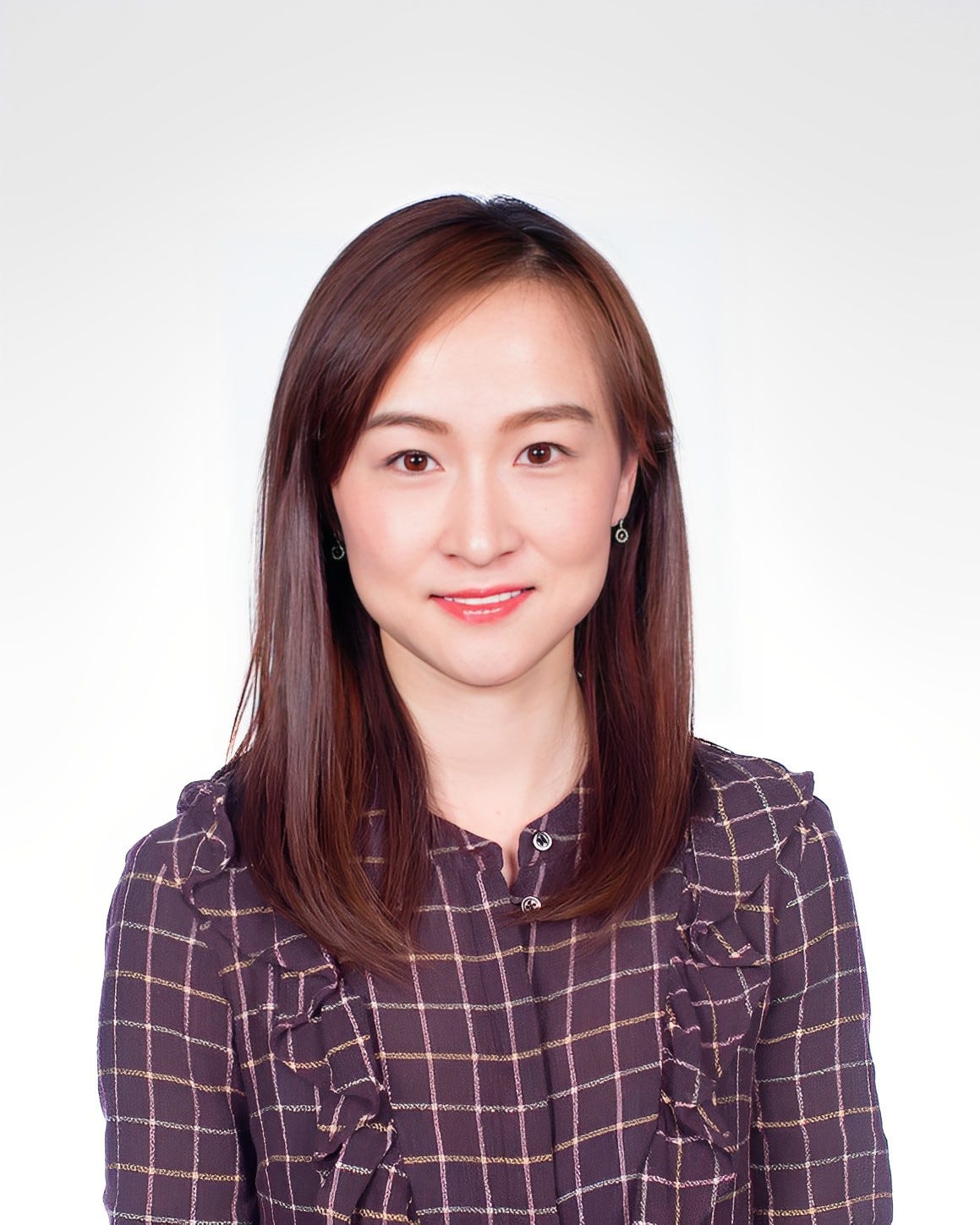
LinkedIn Head of Governance, Risk and Compliance Angel Liu shares her remarkable journey from Shanghai to Silicon Valley and explains why security professionals must master adaptability.
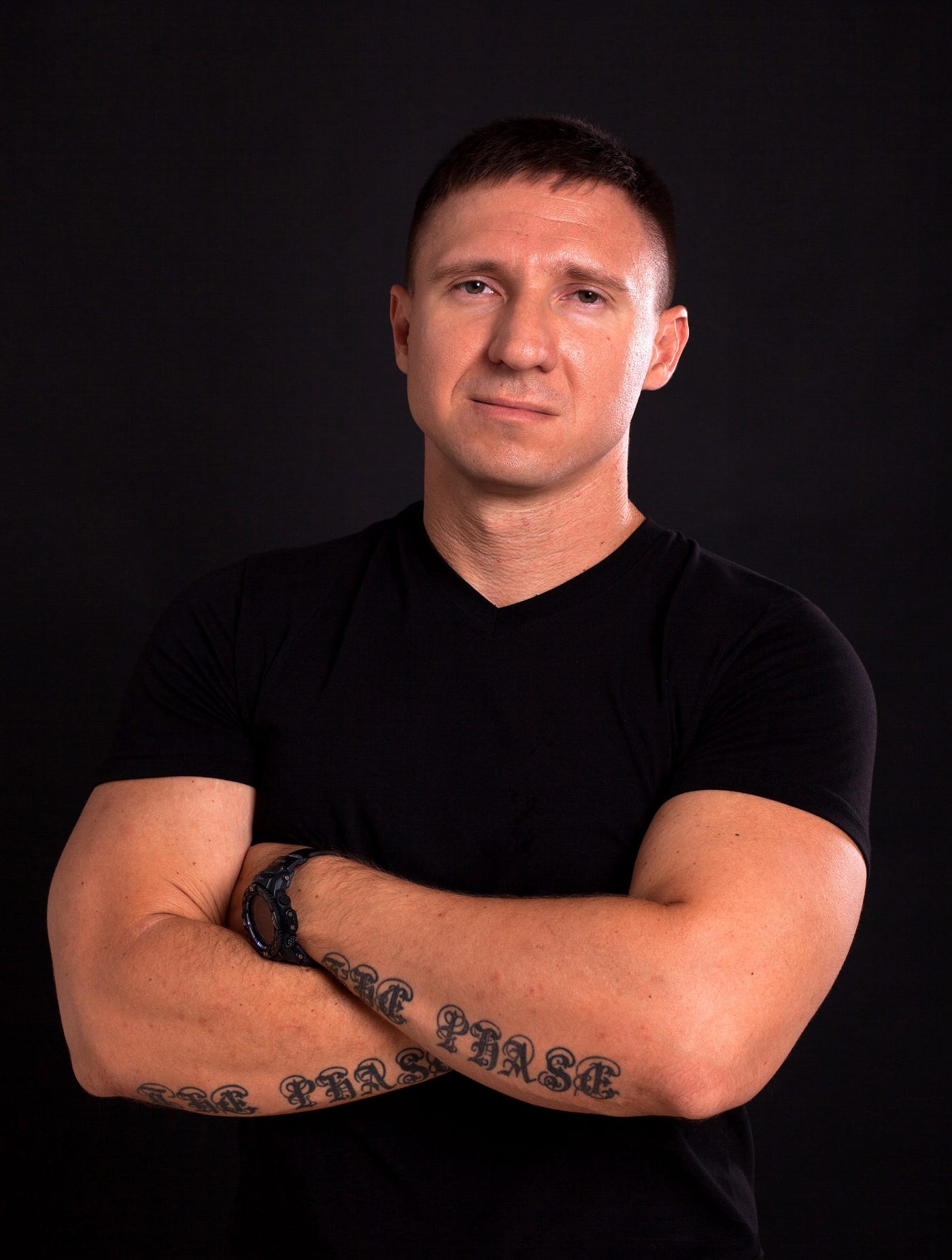
The founder and CEO discusses performing self-neurosurgery to advance sleep technology and shares his strategies for maintaining tenacity when faced with extreme obstacles.
 Yitzi Weiner
Anupam Singhal, SVP and Business Unit Head at Tata Consultancy Services, explains how artificial intelligence and contextual knowledge are revolutionizing digital banking and enterprise experiences.